USCIS
USCIS certified translation requirements for foreign-language documents
USCIS document translation requires more than fluent English. NARIA applies document-specific review, consistent terminology and a separate quality-control stage to Turkish and other foreign-language records.
The governing USCIS standard
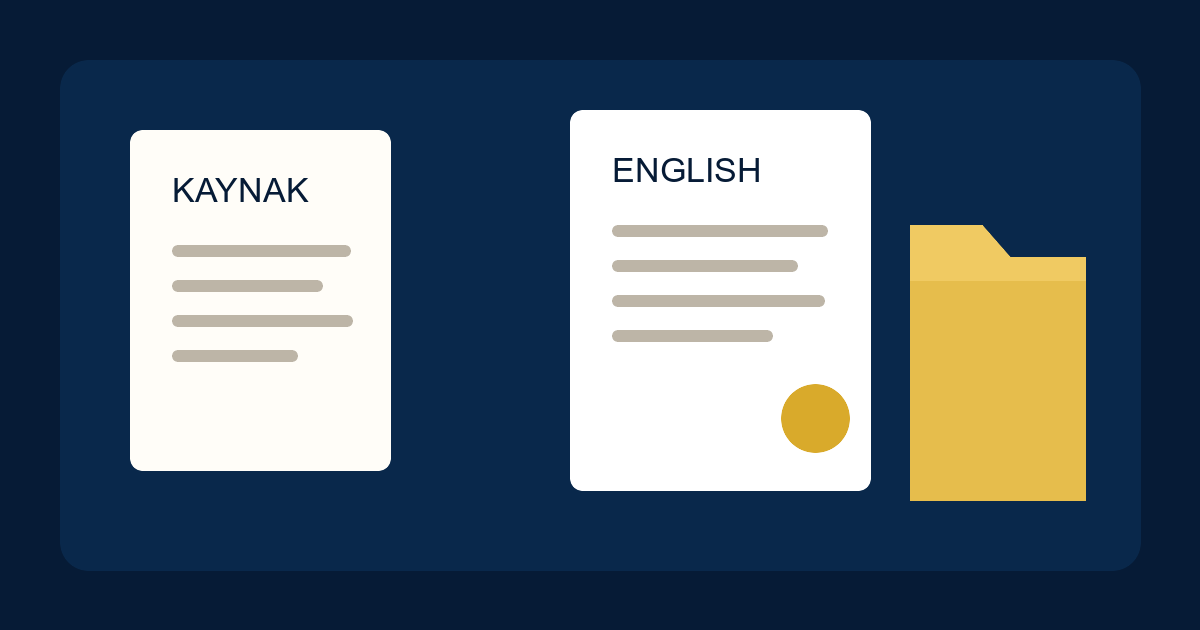
The general rule in 8 C.F.R. § 103.2(b)(3) requires any foreign-language document submitted to USCIS to be accompanied by a full English translation. The translator must certify that the translation is complete and accurate and that the translator is competent to translate from the source language into English.
A “certified translation” in this context is about the translator’s signed certification. It should not automatically be treated as the same thing as notarization, an apostille or a sworn-translation procedure used in another country.
What “full translation” means in practice
Headers, stamps, seals, marginal notes, handwritten entries, reverse-side text and legibility issues can all affect how a record is understood. If text cannot be read, that limitation should be identified rather than silently omitted.
USCIS administrative decisions have treated partial translations and certifications that fail to address completeness or competence as deficient. A page-by-page comparison before delivery reduces avoidable filing problems.
- Document-by-document scope review
- Treatment of visible seals, signatures and legibility issues
- Consistent handling of recurring personal and institutional details
- A certification prepared for the corresponding document or set
Consistency across a document-heavy filing
Turkish civil registry extracts, court records and academic documents often repeat names, dates, places and institutional titles. Those details should follow a consistent approach across the set, especially when the passport uses a specific spelling.
A discrepancy that exists in the source should not be quietly corrected in translation. NARIA preserves the source-document record and applies an appropriate translator note when the document calls for one.
NARIA’s pre-delivery quality review
Clients should not have to assemble a professional translation package from an online checklist. NARIA reviews the supplied source, translated content and certification as one deliverable, with clear communication throughout the process.
- Source and translation compared before delivery
- Names, dates and identifiers reviewed for consistency
- Layout prepared for practical document comparison
- Responsive, client-focused communication from quote to delivery
FREQUENTLY ASKED
Short answers
Does USCIS require translations to be notarized?
The general USCIS translation rule focuses on a full English translation and the translator’s certification of completeness, accuracy and competence. NARIA defines the appropriate delivery scope for the supplied document set.
Can only the relevant paragraph be translated?
The regulation calls for a full English translation. Selected excerpts can leave the submission noncompliant or reduce the evidentiary value of the document.
What should the translator certification say?
It should identify that the translation is complete and accurate and that the translator is competent to translate from the source language into English, with the translator’s identifying and signature details.
Official sources
RELATED GUIDES
 TURKISH DOCUMENTS
Turkish civil documents for U.S. filings: why specialist review matters
Specialist translation of Turkish civil registry extracts, Formül A, court records and e-Devlet documents for U.S. filings.
 CROSS-BORDER DOCUMENTS
Apostille, notarization and certified translation: what each step does
Learn the difference between an apostille, notarization, sworn translation and translator certification for international documents.
DOCUMENT REVIEW